Why fewer sessions can be safer
For decades, radiation was delivered in small daily doses over many weeks because the imaging could not confirm exactly where the tumor was each day. Modern image guidance and adaptive planning have changed that: when we can see the tumor in 3D every visit and re-optimize the plan around it, we can safely give a much larger dose each time.
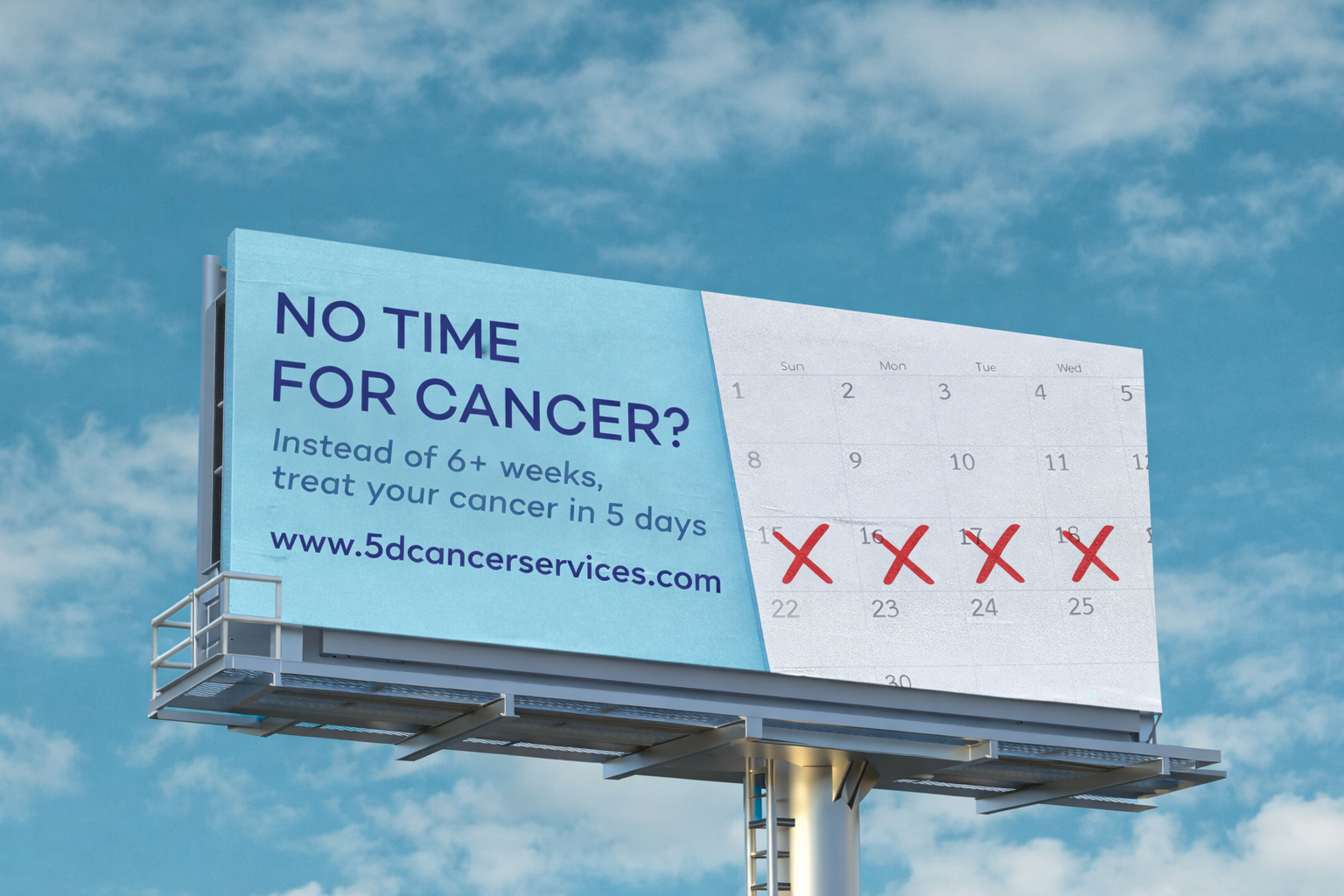
The total biological dose to the tumor is similar — or higher — but the patient finishes treatment in a fraction of the visits.
Where hypofractionation has the strongest evidence
Randomized trials and large registry studies support hypofractionation in early-stage prostate cancer (5–20 sessions), early breast cancer (5–15 sessions), early-stage non–small-cell lung cancer (3–8 sessions), liver and pancreatic tumors (5 sessions), and bone metastases (1–5 sessions).
Your radiation oncologist will recommend a fractionation schedule based on the cancer type, location, your overall health, and your goals.
What the patient experience looks like
A typical hypofractionated visit at 5D Cancer Services takes 30–45 minutes door to door. Most of that time is spent on imaging and plan adaptation; the radiation beam itself is on for only a few minutes per session. There is no anesthesia, no IV, and no overnight stay.
Because the course is short, side effects tend to be more compressed but also resolve faster. Most patients continue working and driving themselves to treatment throughout the course.